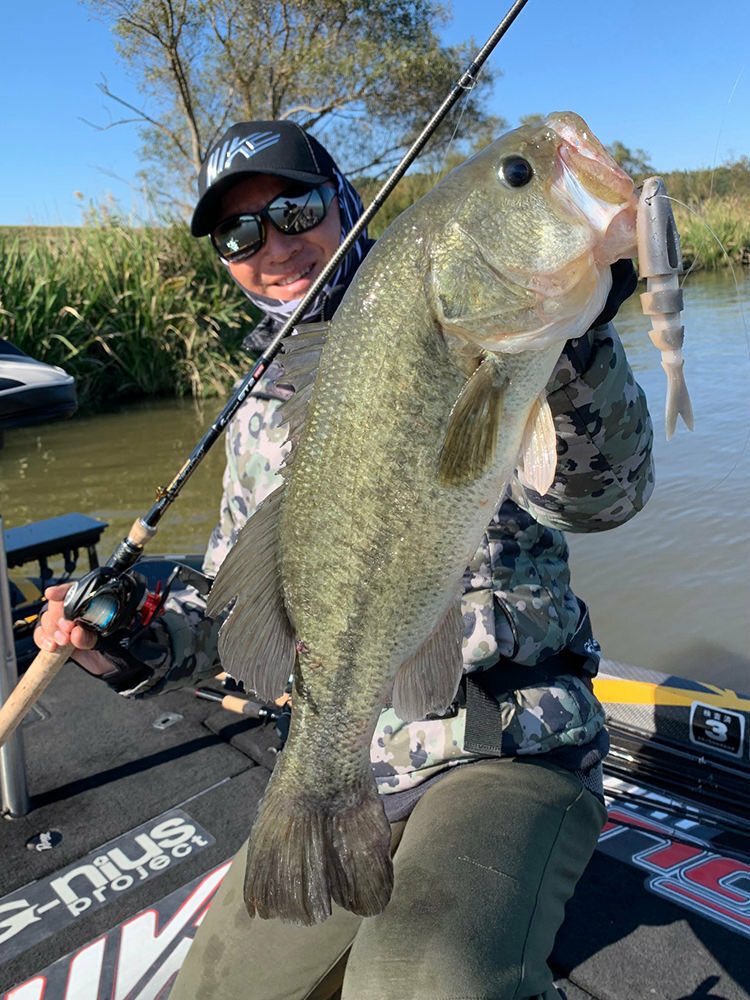
A passionate request from big bass hunters has been fulfilled!
The original Javalon has been completely reissued
The legendary swimbait-type high-density worm, Javalon, is finally back.
The texture of the material is key.
Javalon was developed just after Imakatsu was founded and has been a long-selling worm for over 10 years. It was once renewed as Javalon Neo, but big bass hunters all over the country have been passionately requesting that the original Javalon be re-released. Finally, a complete reissue has been realized with the same shape, material, and factory as before.
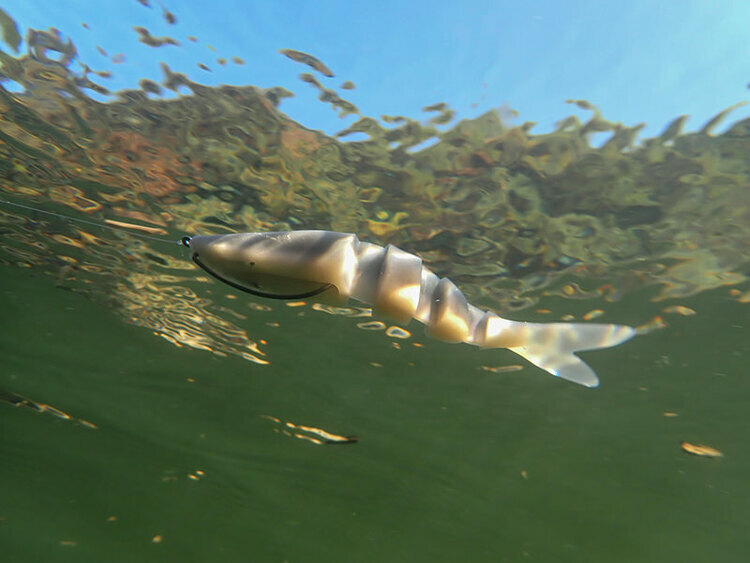
Because of its multi-jointed swimbait-like appearance, it has a strong image of soft, undulating swimming, but the amazing thing about Javalon (part 1) is its vast range of applications. It can be reeled in quickly, reeled in slowly, shot, sunk, and on the surface of the water, and it also has excellent skipping, making it the ultimate multi-worm that can do anything.

In the Lure Magazine interview to commemorate the reprint, we discovered that it works well with a 7g free rig. The large water resistance of the Javalon creates a sufficient distance between the sinker and the lure, and the free worm falls behind the sinker, which is a characteristic of the free rig. Imae named it the "food chain rig" because of the relationship between the Javalon (baitfish) chasing the sinker (gori, etc.) and the bass targeting the bait. The moment the sinker hits the bottom, this rig is at its peak of inviting the bass. The Javalon becomes a no-sinker state for a moment, and when it suddenly stops and waves, it takes a complete turn from swimming straight down, and bites come one after another.
The gap between stable swimming and fluttering action
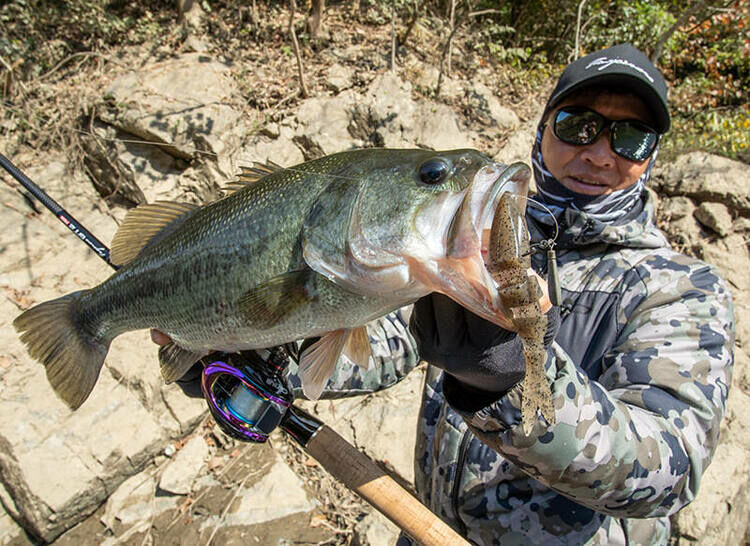
In fact, this momentary irregular fluttering is the hidden greatness of the Javalon (part 2). While the lure's undulating, trout-like swimming style is what attracts attention, big bass hunters are also drawn to its momentary flapping action, which can only be achieved with the JAVALLON material and shape. The truly irregular and natural flapping action created by the JAVALLON's multi-joint structure and unique material is the source of Imae's success in the Basser All-Star Classic using only JAVALLON.
How to use in the Kasumi water system
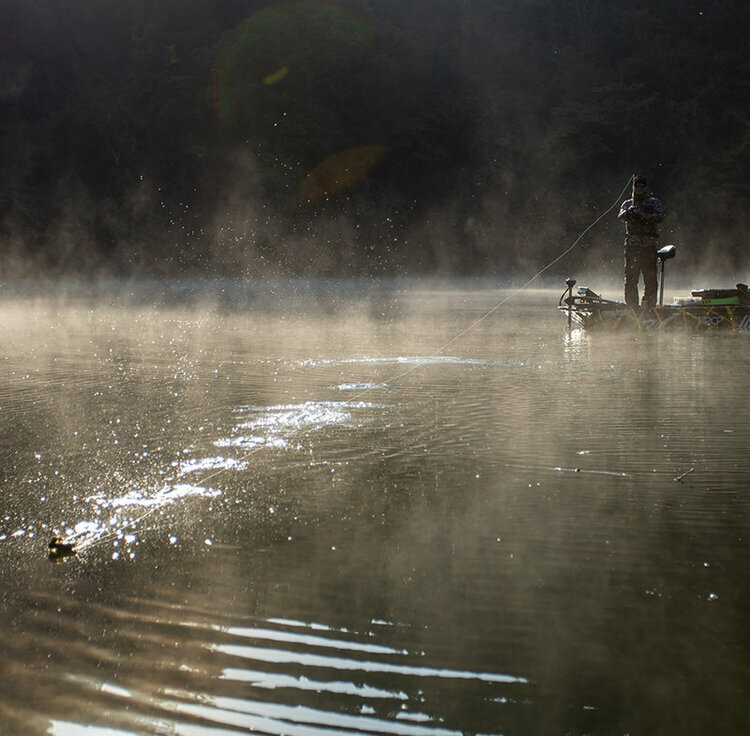
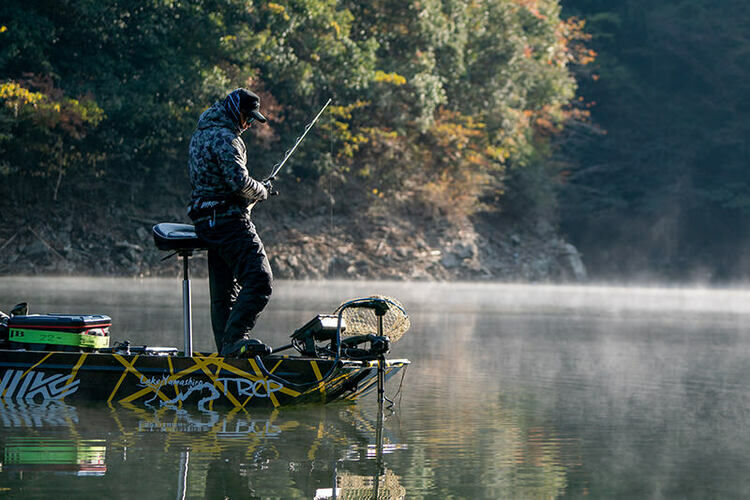
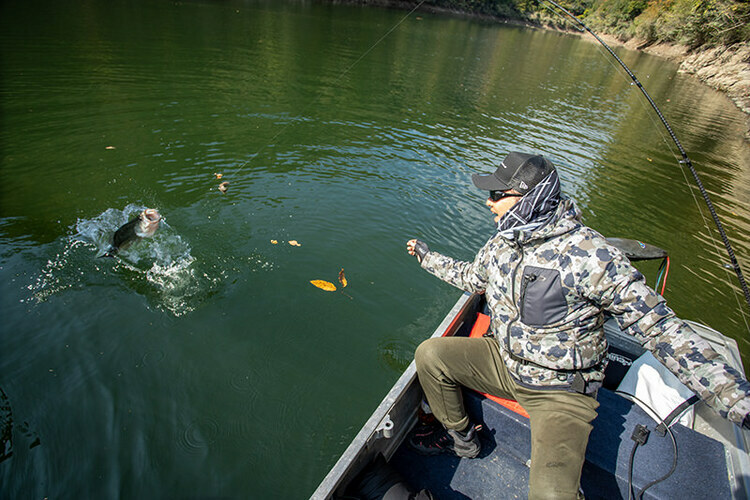
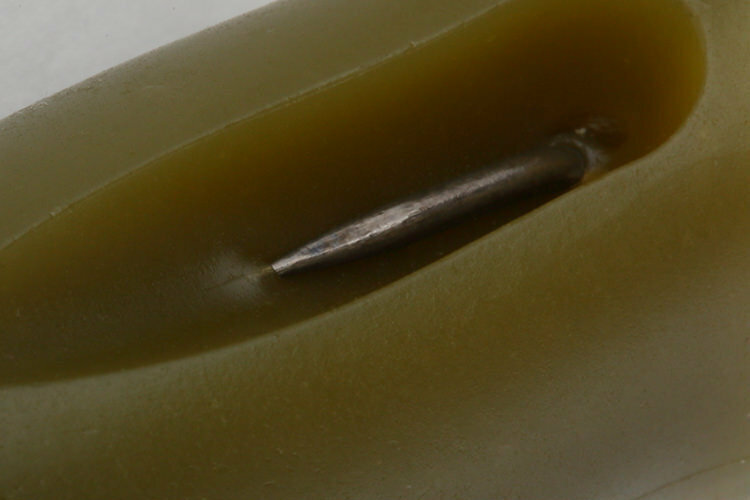
Imae used the final prototype JAVALLON 140 in the All-Star Classic. It is a no-sinker rig with a 4/0 offset hook, with two 0.4g nails inserted into the left and right sides of the abdomen with a thin layer of skin (see swimming photo above) to lower the center of gravity. The key is to use 16 pound fluorocarbon. After casting, the trick is to sink the JAVALLON to the bottom and at the same time, sink the line to the bottom completely. Reel it slowly in an I-shape to make the line disappear by crawling along the bottom and swimming. However, the speed at which the Javalon does not undulate energetically is not the best, but a speed where there is almost no action, literally an I-shaped pull, where the Javalon hardly makes any waves. The best bite chance is when it touches a vertical structure such as a stake and starts to waver. Just like the bottom swell of a free rig, the sudden multi-jointed fluttering of the Javalon is what triggers a bite.
The texture of the material is also a big factor in why it is so effective in the worn-out, hazy waters and against big bass.
The thing that we paid the most attention to in the Javalon revival was actually the old manufacturing factory and materials. In modern bass fishing, it is much more effective to use the Javalon as a new high-density worm than to use it as an old-fashioned swim bait. Imae does not try to force it to swim, but asserts that the three-point play of "letting it drift", "pulling it slowly", and "leaving it alone" is the killer content of modern bass fishing.
One of the materials that best suits this play is the JAVALLON material. In other words, it can be used like a swimbait that reacts to the swimming action and vibration, but it can also be used like a worm that has the power to attract fish to pick up and eat even if you drag it or leave it alone. This is what makes JAVALLON amazing (part 3).
Correct hook setting method
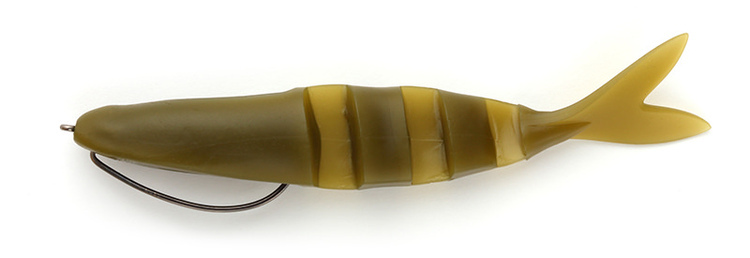
Insert through the lead hole and pull out through the lead hole
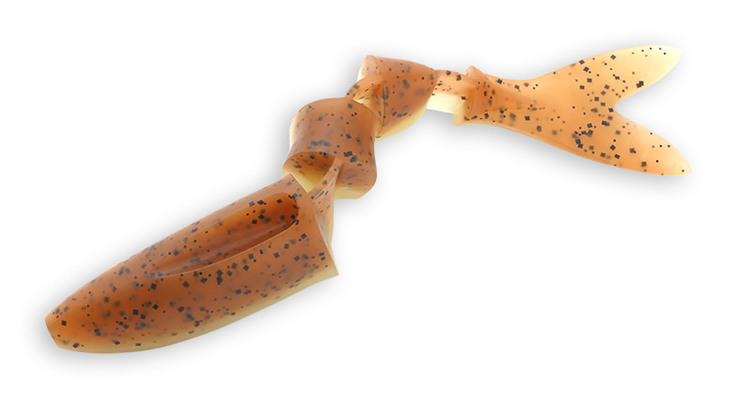
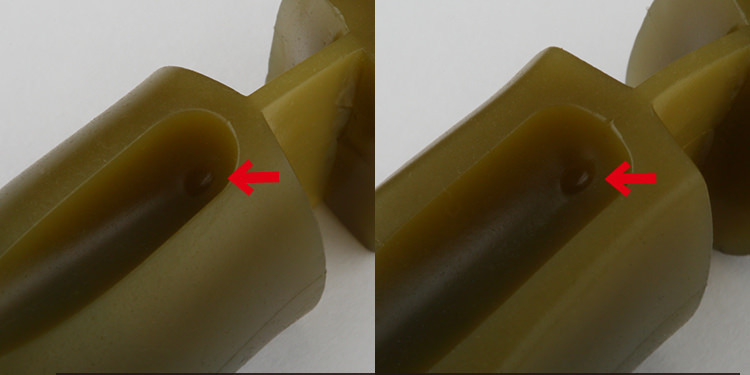
The small indentations at the rear of the slits on the top and bottom are the hook lead holes. When you pull the hook from the lead hole on the ventral side to the lead hole on the dorsal side, it will automatically be set beautifully.
By the way, a 4/0 hook is generally suitable, but please note that the size varies slightly depending on the hook manufacturer (Imae recommends Hayabusa's T.N.S offset #4/0).
If you bury the hook point (needle tip) in the slope of the slit by just one thin layer of skin, it will be safe against cover. Hooking is very easy if you use the right tackle. By the way, Imae's tackle was a Super Stallion GT2RS (EG) set up with 16-pound fluorocarbon.